THE RECOVERY REPORT
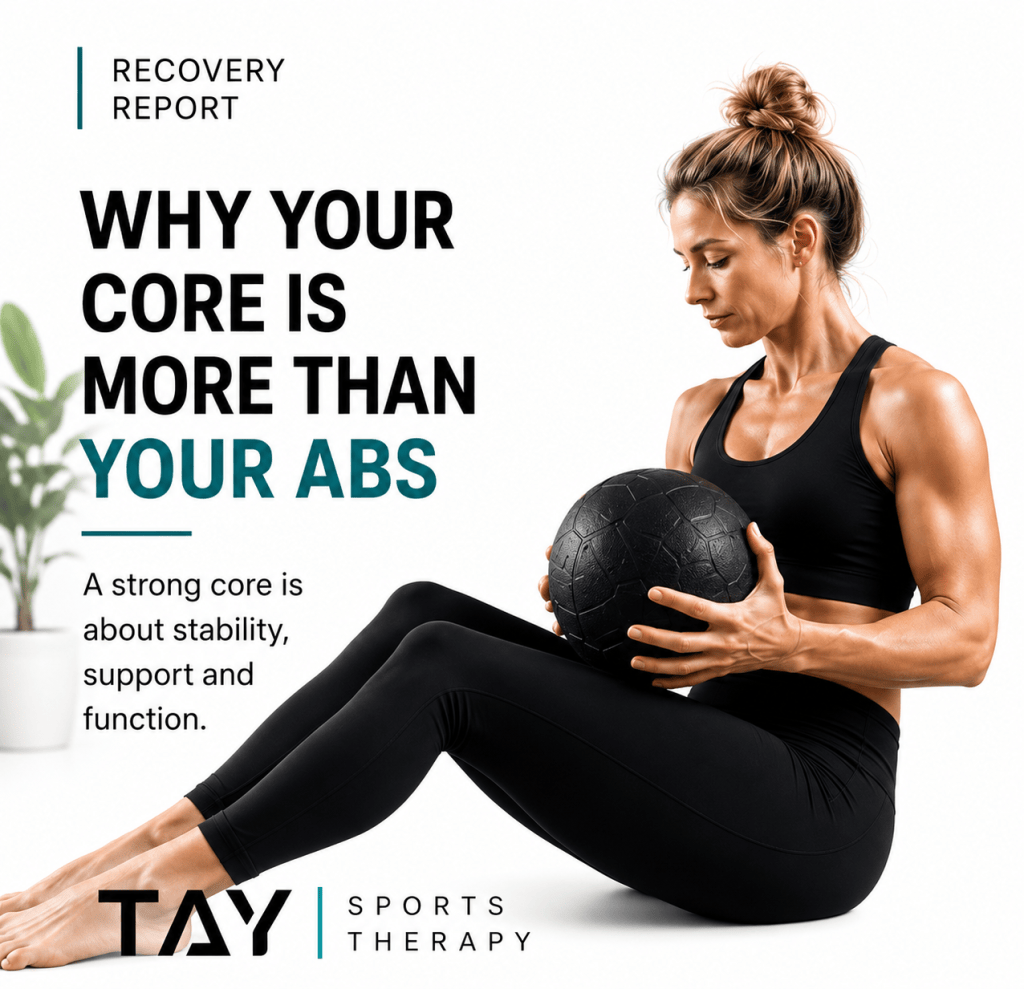
When most people hear the word “core”, they immediately think about abdominal muscles.
The reality is far broader.
Your core is a complex system of muscles that work together to support movement and stability.
THE CORE IS A TEAM
The core includes:
- Abdominal muscles
- Back muscles
- Diaphragm
- Pelvic floor muscles
- Deep stabilising muscles around the spine
These structures work together to manage pressure and transfer force throughout the body.
STABILITY IS TASK DEPENDENT
The purpose of the core is not to keep the spine rigid.
Instead, it helps create the right amount of stability for the task being performed.
Whether lifting a box, running, reaching overhead or changing direction, the core adapts to the demands placed upon it.
STRONGER ISN’T ALWAYS BETTER
Many people focus on endless abdominal exercises.
However, effective core function is often developed through whole-body movements such as:
- Squats
- Deadlifts
- Carries
- Lunges
- Rotational exercises
DON’T FORGET BREATHING
Breathing plays an important role in core function.
The diaphragm works closely with the abdominal muscles and pelvic floor to help regulate pressure and support movement.
Recovery Principle
Your core is not a single muscle. It’s a coordinated system designed to help you move efficiently and confidently.



Leave a Reply