THE RECOVERY REPORT
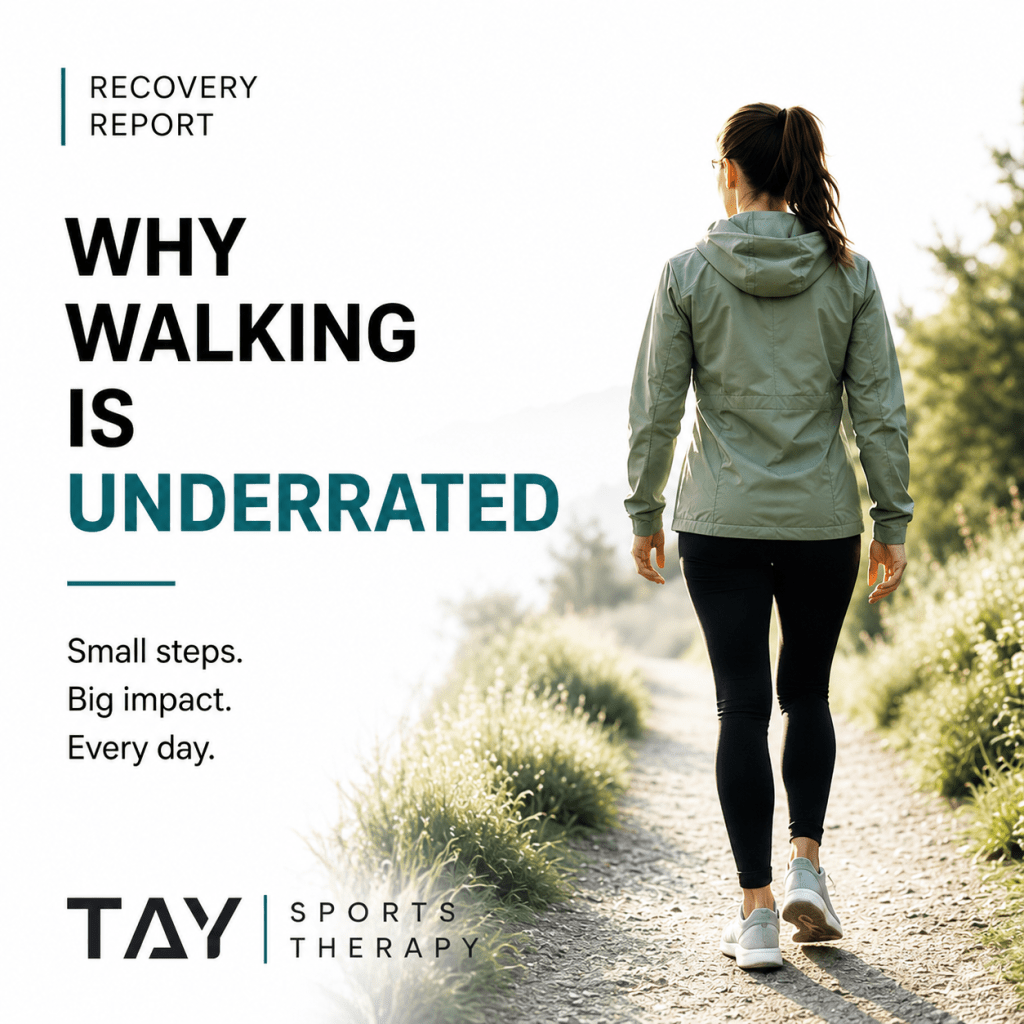
When people think about exercise, they often picture running, cycling, gym sessions or fitness classes.
Walking rarely gets the same attention.
Yet walking remains one of the most accessible and effective forms of physical activity available.
SMALL STEPS ADD UP
Many people underestimate the benefits of regular walking because it feels too simple.
However, regular walking has been shown to improve cardiovascular health, reduce the risk of chronic disease, support weight management and improve mental wellbeing.
The benefits come from consistency rather than intensity.
WALKING SUPPORTS RECOVERY
Walking increases circulation without placing excessive stress on the body.
This makes it particularly useful during recovery from injury, after hard training sessions or during periods when energy levels are lower.
For many people, walking provides a way to remain active without aggravating symptoms.
GOOD FOR BODY AND MIND
Walking has been associated with reduced stress, improved mood and better mental health outcomes.
Even short walks outdoors can help reduce feelings of anxiety and improve overall wellbeing.
MOVEMENT DOESN’T HAVE TO BE EXTREME
You do not need to be exhausted for exercise to be effective.
Consistent movement performed regularly often delivers greater long-term health benefits than occasional intense workouts.
Recovery Principle
Never underestimate the power of simply moving more.



Leave a Reply