THE RECOVERY REPORT
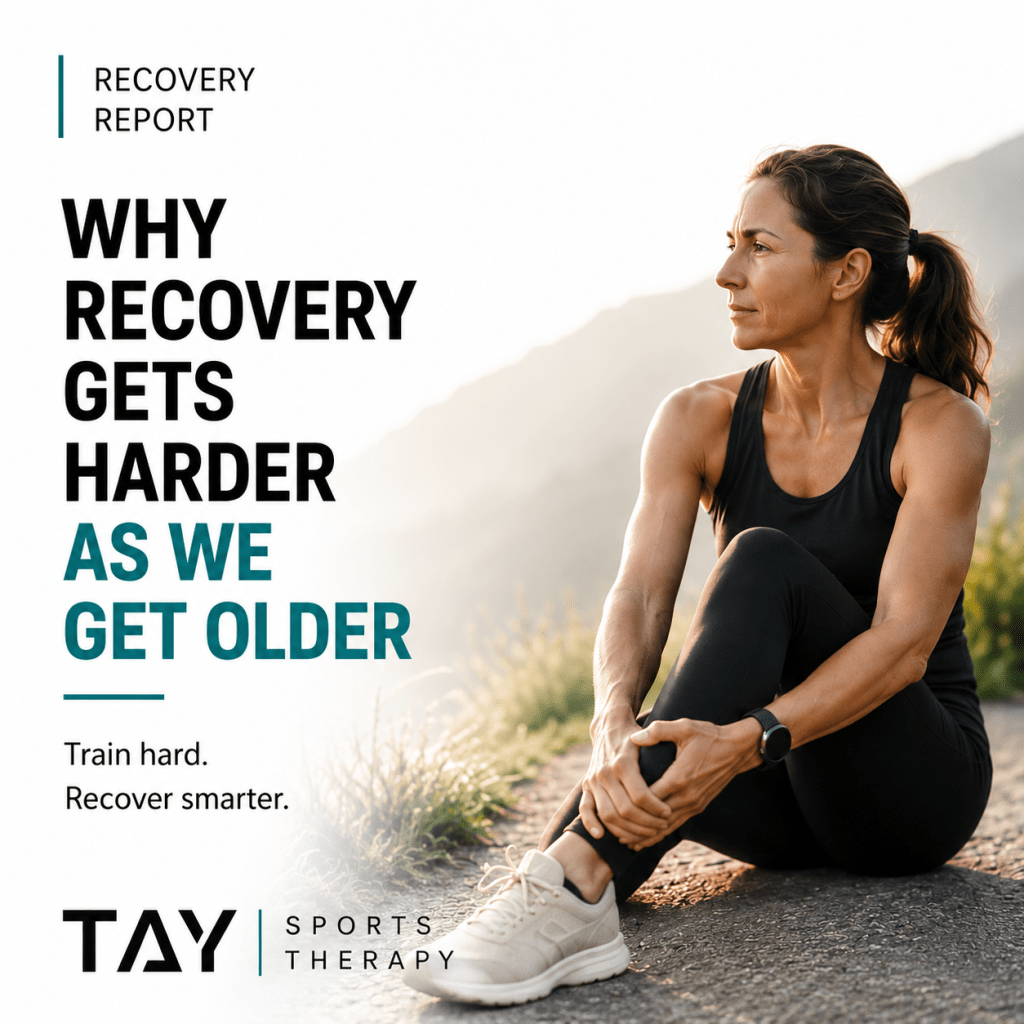
If you’re in your forties, fifties or beyond, you might have noticed that recovery isn’t quite as quick as it used to be.
That doesn’t mean you should stop exercising.
It simply means recovery deserves more attention.
RECOVERY CAPACITY CHANGES
As we age, several physiological changes occur:
- Reduced muscle protein synthesis
- Hormonal changes
- Increased recovery time following hard sessions
- Reduced tissue resilience
These changes are normal.
STRESS MATTERS MORE
Many adults are not only managing training.
They’re also balancing:
- Work
- Family responsibilities
- Financial pressures
- Reduced sleep
Recovery is influenced by all forms of stress, not just exercise.
QUALITY BECOMES MORE IMPORTANT
Training harder is not always the answer.
Often the biggest improvements come from:
- Better sleep
- Consistent strength training
- Appropriate nutrition
- Managing training load
KEEP MOVING
One of the biggest mistakes people make is reducing activity levels because recovery takes longer.
Regular movement remains one of the most effective ways to maintain physical function as we age.
Recovery Principle
As recovery capacity changes, recovery strategy becomes more important.



Leave a comment