THE RECOVERY REPORT
Perimenopause is often where things start to feel… different.
You might notice:
- More joint aches and stiffness
- Slower recovery
- Niggles appearing more frequently
- Fluctuating energy levels
- Or simply not feeling like your body responds the way it used to
This isn’t just about exercise—it can affect day-to-day life, from work to sleep to how comfortable you feel moving.
It’s Not Just Physical
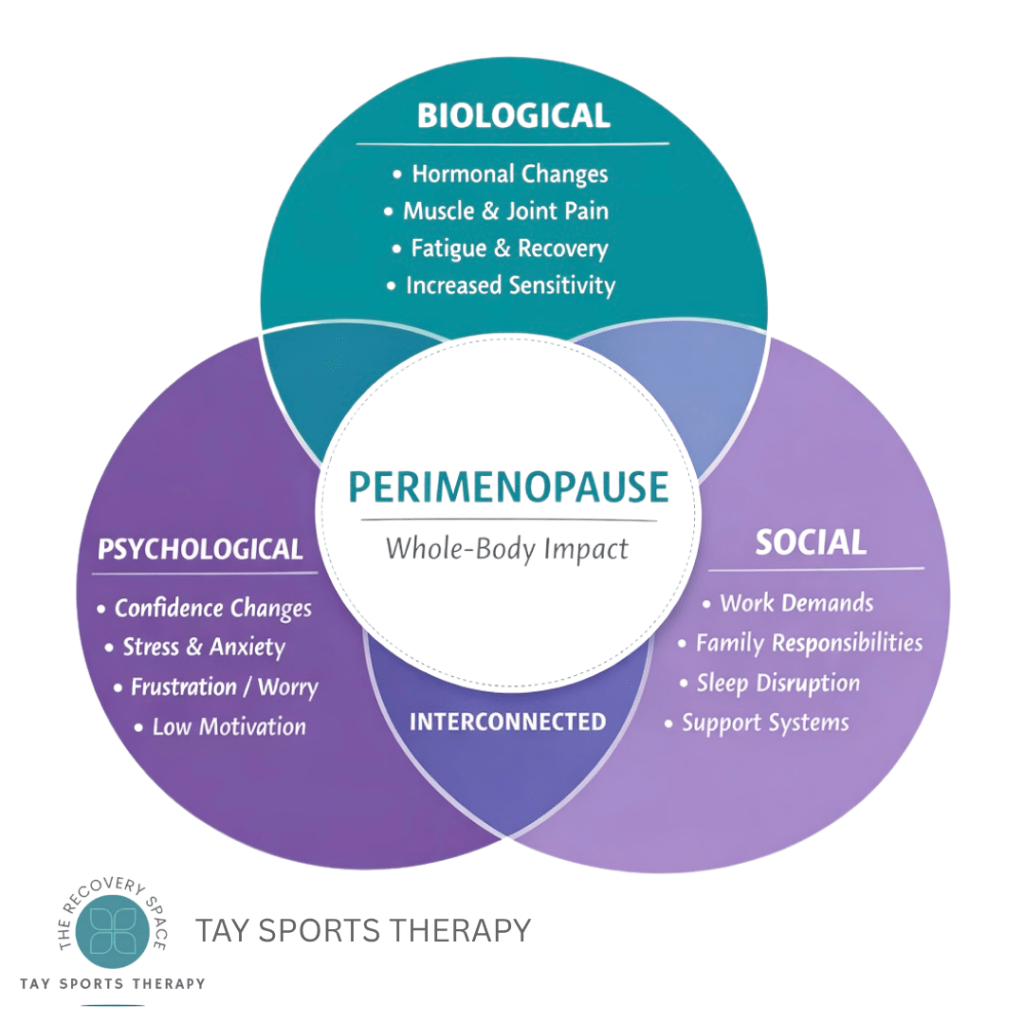
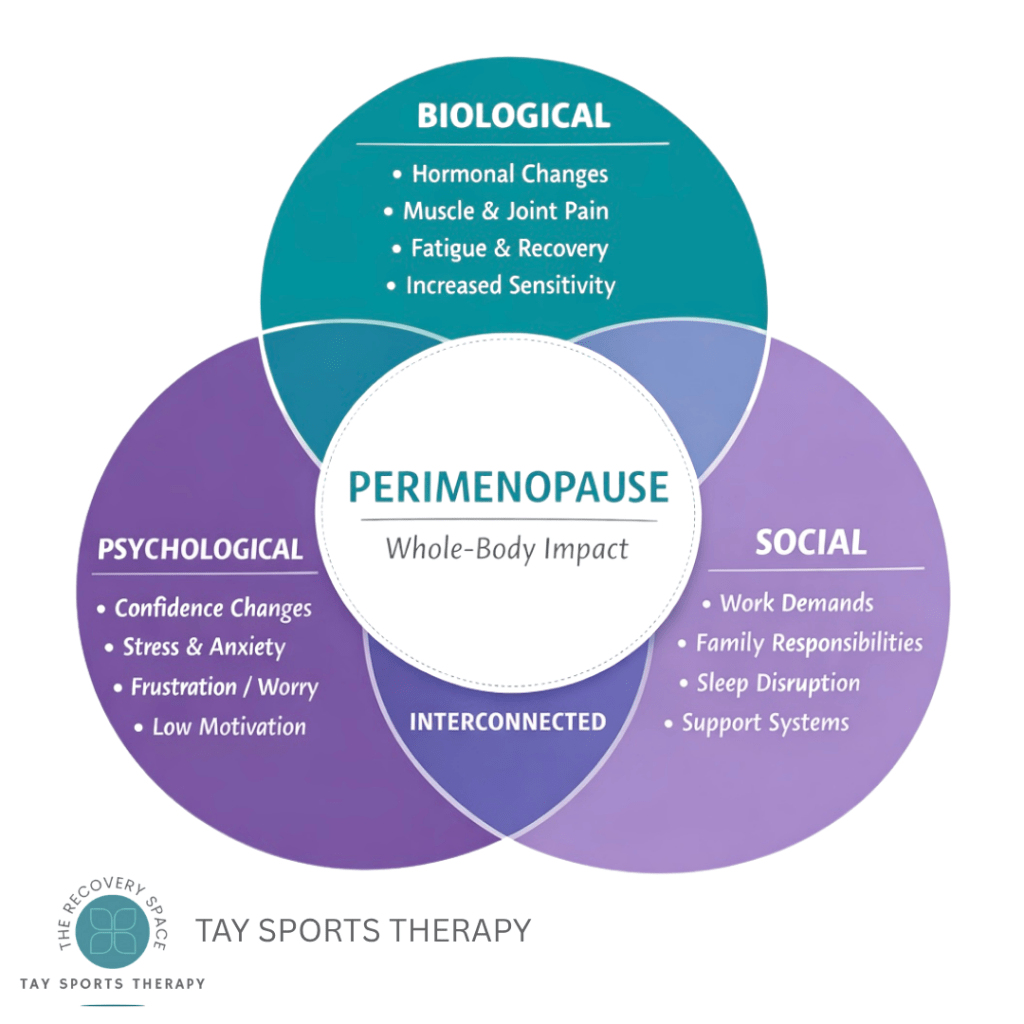
Perimenopause is a whole-body transition. A helpful way to understand it is through a biopsychosocial lens.
Biological
Hormonal fluctuations—particularly oestrogen—can influence:
- Muscle and tendon health
- Joint comfort
- Recovery
- Pain sensitivity
This can make your body feel more reactive or less predictable.
Psychological
You might also notice:
- Reduced confidence in your body
- Frustration with how things feel
- Worry about ongoing aches or injuries
- Changes in motivation
These are a normal part of this stage—and they influence how your body feels.
Social
Daily life plays a big role:
- Work demands
- Family responsibilities
- Sleep disruption
- General stress
All of these contribute to your overall load, not just physical activity.
Why This Matters for Pain
Pain isn’t just about tissues – it’s influenced by your nervous system and everything going on around you.
During perimenopause:
- Your system may be more sensitive
- Recovery may feel less predictable
- Your tolerance to stress (physical and life) can fluctuate
This doesn’t mean something is wrong—it means your body is adapting.
The Role of Touch & the Nervous System
One often overlooked piece is how your nervous system responds to stress, load, and change.
When your system is more “on edge,” you may notice:
- Increased muscle tension
- Heightened sensitivity to movement or touch
- Feeling more easily overwhelmed
This is where hands-on treatment can play an important role.
Appropriate, skilled touch can:
- Help reduce muscle tone and perceived tension
- Provide a calming input to the nervous system
- Improve body awareness and movement confidence
- Create space for your system to “dial down”
This isn’t about “fixing” tissue—it’s about helping your body feel safer and more settled, which can positively influence pain and movement.
Movement Still Matters
It’s common to do less when things feel off, but movement remains one of the most helpful tools available.
This doesn’t need to be intense.
Regular, appropriate movement can:
- Reduce stiffness and discomfort
- Support joints
- Improve energy and mood
- Help regulate pain
The focus is on finding what feels manageable and building from there.
Strength & Support
Strength work is important—but it doesn’t need to be complicated.
This could include:
- Simple bodyweight exercises
- Resistance-based movements
- Gradually building confidence in what your body can do
The aim is to support your body—not push it to extremes.
Rethinking Recovery
Recovery isn’t just rest—it’s how your whole system resets.
During perimenopause, it can help to:
- Pace activity more effectively
- Build in recovery where needed
- Prioritise sleep
- Adjust expectations without losing momentum
The Overlooked Factors
Often, it’s the basics that have the biggest impact:
- Gentle, regular movement
- Sleep
- Stress levels
- Routine
- Time to slow things down
These directly influence how your body feels and responds.
The Recovery Principle
When your system feels more sensitive, the goal isn’t to push harder, it’s to support it better.
How I Can Help
At Tay Sports Therapy, I offer Perimenopause Support & Treatment Sessions designed to support how your body feels and functions during this stage.
This includes:
- Hands-on treatment to help settle the nervous system and ease discomfort
- Practical guidance on movement and activity
- Support in understanding pain and recovery
- Optional integration of pelvic health and core function
Available as a one-off session or a structured 3-session support plan.
Tay Sports Therapy
If you’re noticing changes in how your body feels or recovers, you don’t need to figure it out on your own.
Perimenopause can affect movement, pain, and confidence—but with the right support, you can continue to feel capable and in control.
Perimenopause Support & Treatment Sessions are designed to give you practical, personalised support to help you move well, manage symptoms, and feel more like yourself again.
Visit www.taysportstherapy.co.uk for more tips from The Recovery Report.
Expert Care For Your Recovery, Performance And Wellbeing
 Tay Sports Therapy
Leave a comment