THE RECOVERY REPORT
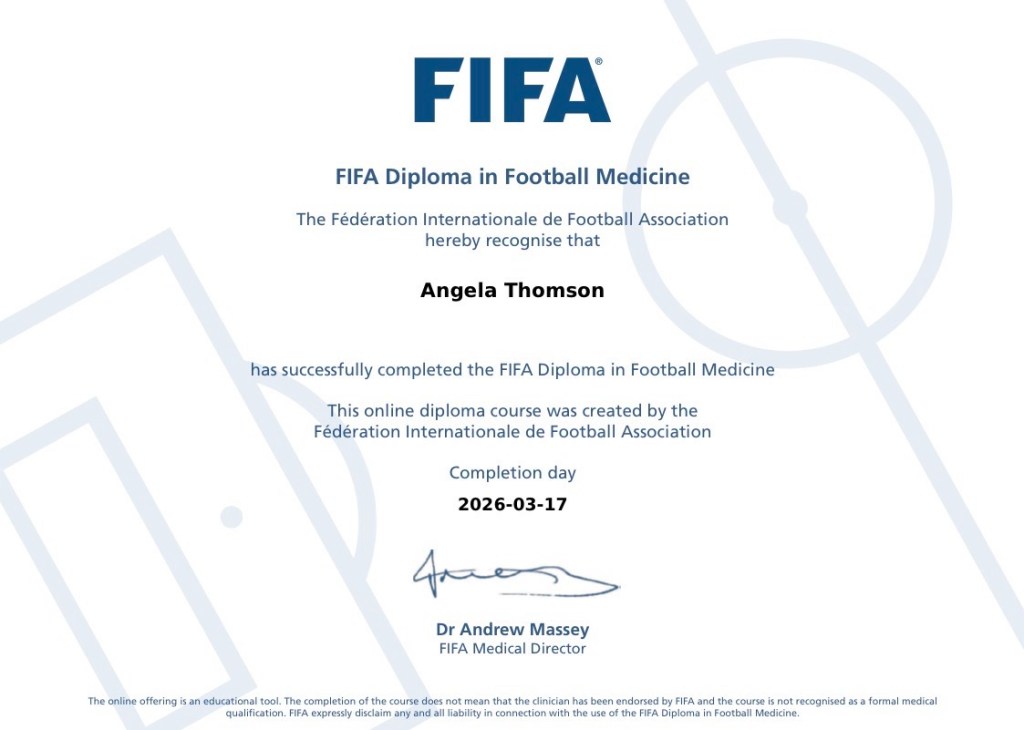
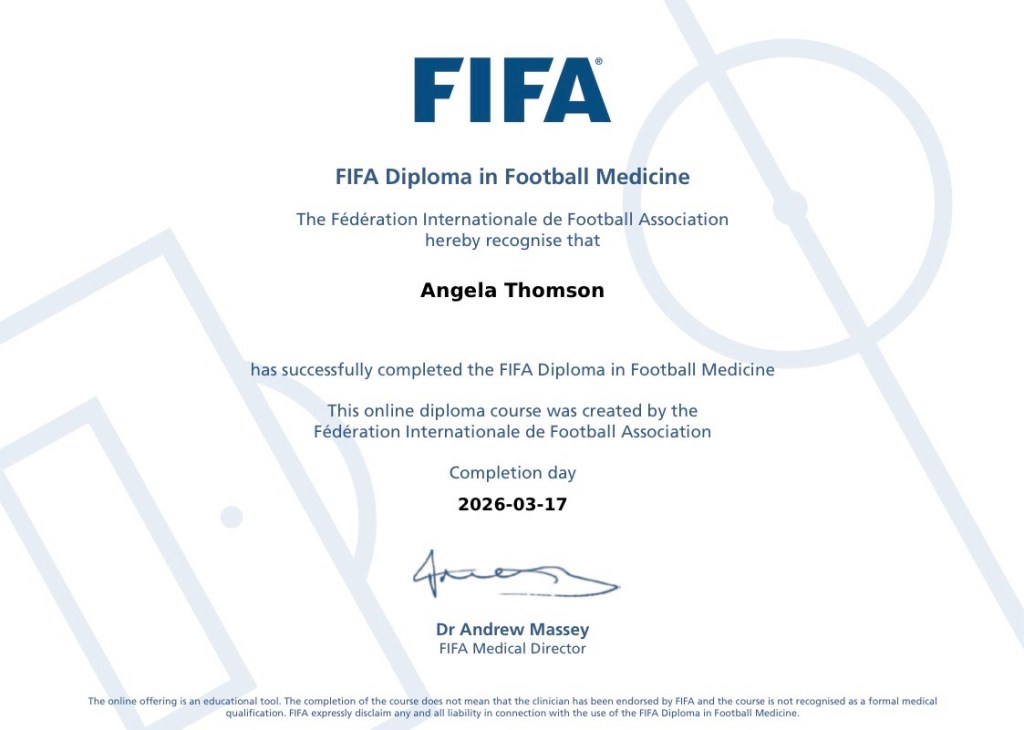
Over the last year I’ve had the opportunity to complete the FIFA Diploma in Football Medicine, a course developed by FIFA to bring together clinicians and therapists working in football worldwide.
The diploma is extensive and evidence-based, covering everything from injury prevention and rehabilitation to recovery strategies, load management, and return-to-play decision-making. Completing it involved hours of reading research, analysing case studies, and thinking critically about how the knowledge could be applied in real-world practice.
Some of the key areas the course covers include:
- Injury Prevention: Structured warm-ups, strength and conditioning, and neuromuscular control programmes such as the FIFA 11+.
- Rehabilitation: Evidence-based strategies to treat injuries, restore function, and prepare athletes for safe return to play.
- Recovery Strategies: Optimising recovery through load management, monitoring fatigue, and understanding nutrition and lifestyle factors.
- Return-to-Play Decisions: Balancing tissue healing, functional testing, psychological readiness, and sport-specific demands.
- Athlete Health and Wellbeing: Considering the physical, psychological, and social factors that influence injury risk and recovery.
- Case Studies and Research Analysis: Translating scientific evidence into practical decisions for real athletes.
What I gained from completing the diploma wasn’t just theoretical knowledge — it was a structured framework for applying evidence-based practice in real life. It reinforced the importance of prevention, preparation, and critical thinking, and reminded me that good rehabilitation isn’t just about getting an athlete back on the pitch — it’s about helping them perform at their best while reducing future risk.
The conversation around injury in sport has evolved. Rather than simply treating injuries after they occur, there’s now a much stronger focus on education, prevention, and long-term athlete health. The FIFA Diploma made that clear, providing the tools to translate research into practical strategies that really make a difference.
Recovery Principle
Injury recovery isn’t just about healing tissue — it’s about building a body that is better prepared for the demands of the sport.
Through structured learning, evidence-based strategies, and thoughtful application, rehabilitation, strength work, and load management work together to create resilient, high-performing athletes.
Sometimes the most powerful outcome isn’t just returning to sport — it’s returning stronger, more aware, and better prepared than before.
A Final Perspective
Completing the FIFA Diploma in Football Medicine reinforced something that’s becoming increasingly clear in sport — the gap between research and practice is where the real impact lies.
There is no shortage of information, protocols or programmes. The challenge is understanding what matters, applying it consistently, and adapting it to the individual in front of you.
The diploma doesn’t just provide knowledge. It provides a way of thinking — one that prioritises evidence, context and long-term athlete development.
And ultimately, that’s what good sports medicine comes down to.
Not just knowing what to do, but knowing why you’re doing it — and how to apply it when it matters most.
Tay Sports Therapy
If you’d like to know more about applying evidence-based rehabilitation, injury prevention, or recovery strategies in your sport or training, get in touch with Tay Sports Therapy today. We can help you stay fit, resilient, and performing at your best.
Visit www.taysportstherapy.co.uk or follow @taysportstherapy for more tips from The Recovery Report.
Expert Care For Your Recovery, Performance And Wellbeing
 Tay Sports Therapy
Leave a comment