
THE RECOVERY REPORT
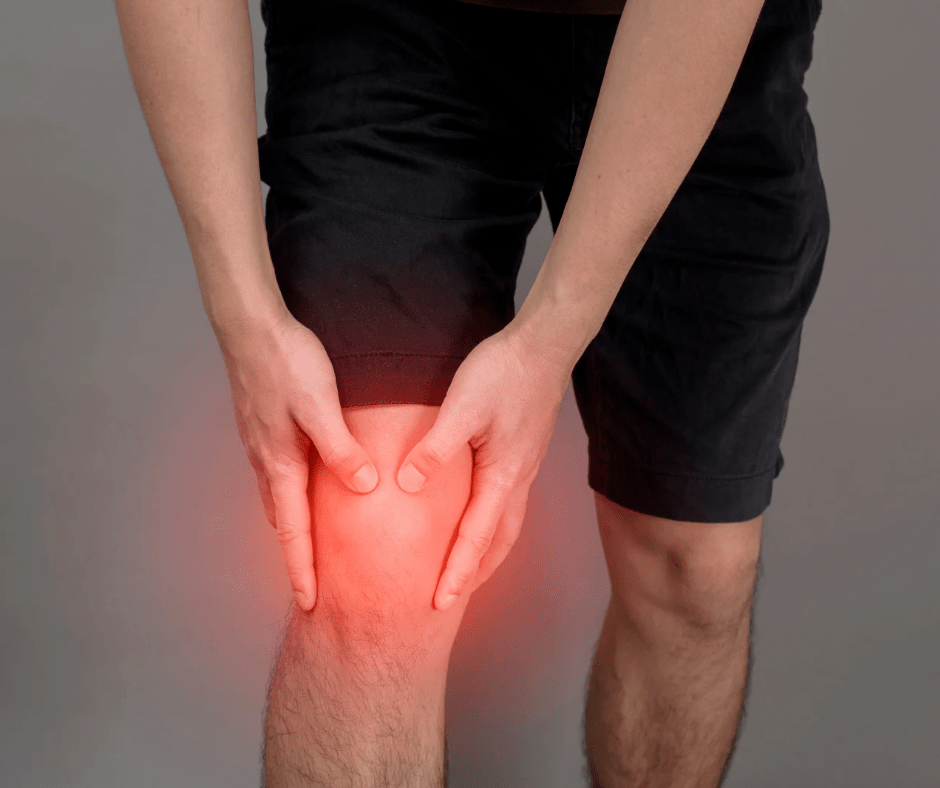
“Knee pain” is one of the most common complaints among runners and gym-goers alike. Often diagnosed as patellofemoral pain syndrome (PFPS), or “runner’s knee”, it can be frustratingly persistent.
What’s Really Going On
PFPS typically arises when load on the patellofemoral joint exceeds tissue tolerance. Factors include muscle imbalance, poor hip control, or excessive training load (Collins et al., 2018).
Pain occurs when the kneecap tracks poorly over the femur, irritating the underlying structures. While it can feel like inflammation, it’s usually a mechanical overload issue rather than acute swelling.
Risk Factors
Sudden increases in running mileage or hill work. Weakness or poor activation in hip abductors and quadriceps. Over-pronation or reduced ankle mobility.
Treatment and Prevention
Effective management combines load modification with strengthening and movement retraining (Barton et al., 2015).
Reduce pain-provoking activities temporarily, not completely stop. Strengthen hips, quads, and core to restore balance. Use taping or manual therapy as short-term support if needed. Reintroduce running gradually, focusing on cadence and stride control.
How We Apply This at Tay Sports Therapy
Our approach to runner’s knee combines assessment, soft-tissue therapy, exercise rehab, and load education. By addressing movement quality, strength, and tissue capacity, we help runners get back to pain-free miles — and keep them there.
Key Takeaway
Runner’s knee is rarely a mystery — it’s a load-management issue with a fixable cause. The right blend of rehab, education, and progressive loading restores confidence and performance.
Get in touch with Tay Sports Therapy — we’ll build a plan that integrates hands-on treatment with performance-focused recovery tailored to you.
Visit www.taysportstherapy.co.uk or follow @taysportstherapy for more tips from The Recovery Report.
References
Barton, C. J., Lack, S., Hemley, N., Tufail, S. and Mills, K. (2015) ‘The “Best Practice Guide” for patellofemoral pain’, British Journal of Sports Medicine, 49(14), pp. 923–934.
Collins, N. J. et al. (2018) ‘Patellofemoral pain: Clinical diagnosis and management’, BMJ, 361, k2201.
Expert Care For Your Recovery, Performance And Wellbeing
 Tay Sports Therapy
Leave a comment