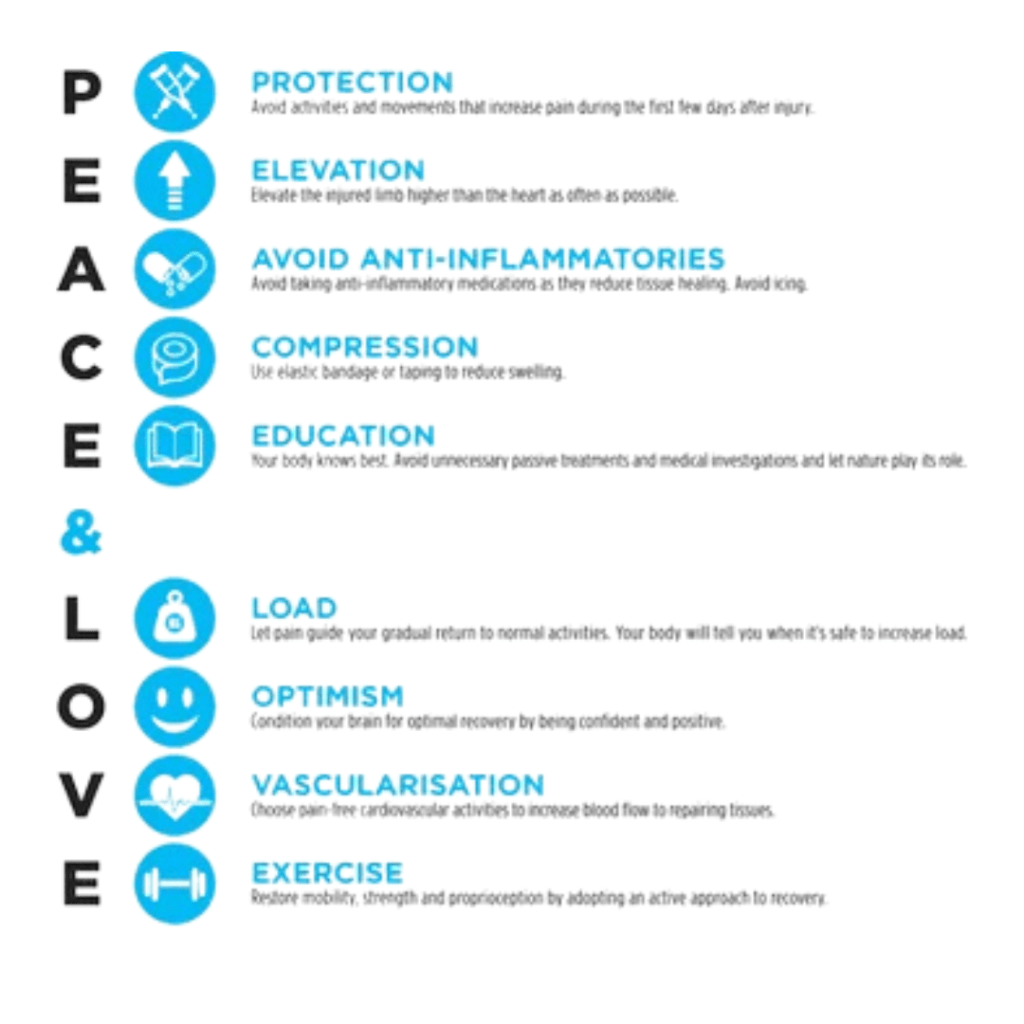
When dealing with acute injuries, knowing how to manage the first few hours and days is crucial for a speedy and effective recovery. Traditionally, methods such as RICE (Rest, Ice, Compression, Elevation) have been widely adopted for injury care. However, the latest approach, PEACE & LOVE, provides a more holistic, evidence-based framework. This method emphasizes both the immediate care needed to reduce harm and the longer-term recovery steps to optimise healing.
Here’s a breakdown of what PEACE & LOVE stands for, and how you can use it to manage acute injuries:
PEACE (First 48hours: Immediate Care)
The PEACE acronym focuses on the critical early phase after an injury:
1. P – Protect
• Limit movement for 48 hours to prevent further injury. This doesn’t mean complete immobilisation, but reducing strain on the injured area to allow the body to initiate healing.
2. E – Elevate
• Elevate the injured area above heart level, if possible, to reduce swelling. This can help with fluid drainage and reduce unnecessary swelling.
3. A – Avoid Anti-Inflammatories
• Avoid anti-inflammatory medications such as NSAIDs (e.g., ibuprofen) as they might interfere with tissue healing. Similarly, ice should be used cautiously as it can blunt the natural inflammatory response, which is key for initiating repair.
4. C – Compress
• Use elastic bandages or taping to compress the area and manage swelling. Compression helps control the amount of swelling that can occur by limiting fluid accumulation around the injured tissue.
5. E – Educate
• Patient education is crucial. Understanding the healing process and the importance of active recovery helps patients avoid over-treatment and promotes better adherence to recovery plans.
LOVE (Day 3 Onwards: Active Recovery)
Once the initial inflammation settles, the focus shifts to the LOVE phase, which aims to promote tissue regeneration and restore normal function:
1. L – Load
• Gradually reintroduce movement and weight-bearing activities to the injured area. Early controlled loading of tissues helps stimulate repair and strengthens the healing tissue, leading to faster recovery.
2. O – Optimism
• A positive mindset and reassurance play a significant role in recovery. Studies have shown that psychological factors like fear and anxiety can impede the healing process. Encouraging an optimistic approach helps with adherence to rehab and reduces the risk of chronic issues.
3. V – Vascularisation
• Engage in pain-free cardiovascular activities to promote blood flow, which accelerates healing. This could involve cycling, swimming, or walking, depending on the nature of the injury. Improved blood flow brings nutrients and oxygen to the healing tissue, speeding recovery.
4. E – Exercise
• Rehabilitative exercises tailored to the injury are essential for restoring mobility, strength, and balance. An individualised exercise plan, often created by a sports therapist or physiotherapist, helps prevent re-injury and ensures a return to full function.
Why PEACE & LOVE Is Superior
This method moves beyond merely managing symptoms like pain and swelling. By combining protection, controlled movement, and optimism, PEACE & LOVE ensures both the physical and psychological aspects of injury recovery are addressed. This approach is particularly useful for sports injuries where maintaining long-term functionality is critical.
Furthermore, the integration of vascularisation and exercise into the latter phases of recovery helps optimise healing and prevent the development of chronic problems. It reflects a shift in understanding: rest and passive treatments alone are not enough. Active recovery strategies must be embraced to achieve optimal outcomes.
PEACE & LOVE provides a modern, comprehensive approach to managing acute injuries. Whether you’re a healthcare professional, athlete, or simply someone looking to recover from a sprain, this evidence-based method ensures you’re addressing both immediate symptoms and long-term recovery goals.
 Tay Sports Therapy
Leave a comment