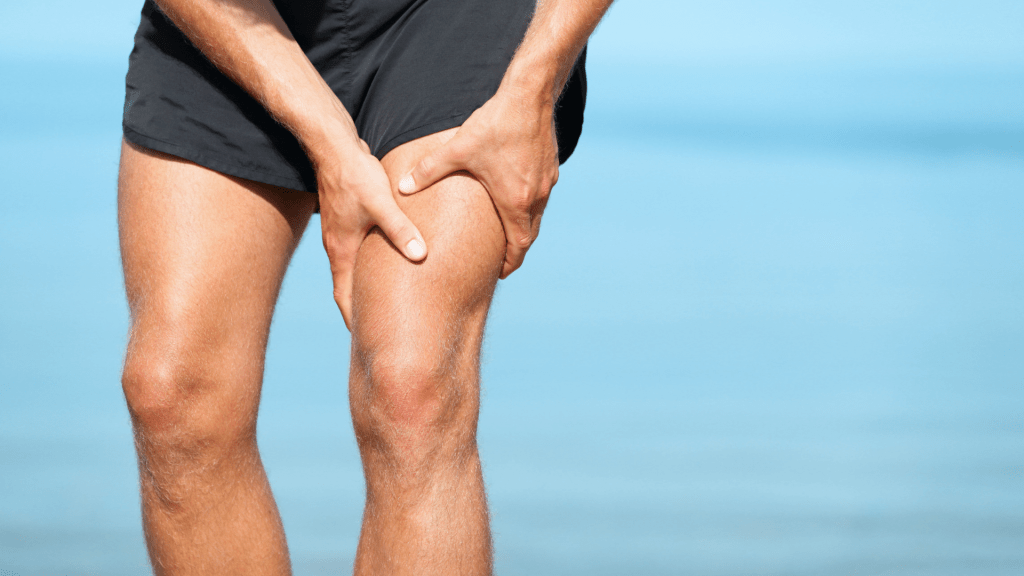
A dead leg, also known as a “charley horse” or quadriceps contusion, is a common injury that typically occurs in contact sports such as football, rugby, or hockey. This injury happens when there is a direct blow or impact to the thigh, usually the front or side, causing the muscle to be compressed against the bone. The impact results in bruising and bleeding within the muscle tissue, leading to pain, swelling, and stiffness. The severity of a dead leg can range from mild, where there is only slight discomfort and minimal functional limitation, to severe, where the muscle is significantly damaged, leading to considerable pain and restricted movement.
Symptoms of a Dead Leg Injury
The symptoms of a dead leg can vary depending on the severity of the injury but generally include:
- Pain and Tenderness: The injured area becomes painful, especially when touched or when the muscle is contracted.
- Swelling and Bruising: The affected area may swell and develop a visible bruise due to the bleeding within the muscle.
- Muscle Stiffness: The muscle may feel stiff and difficult to move, particularly when trying to bend or straighten the leg.
- Weakness: The affected leg may feel weak, making it challenging to bear weight or engage in activities that require leg strength.
Therapist Treatment of a Dead Leg
The therapist plays a crucial role in managing and rehabilitating a dead leg injury. The treatment process typically involves several stages, beginning with acute care immediately following the injury and progressing through rehabilitation to restore full function.
Initial Acute Care (First 48-72 Hours)
- P.R.I.C.E. Protocol: The primary focus during the first few days is to manage pain and minimize swelling. The P.R.I.C.E. protocol—Protect, Rest, Ice, Compression, and Elevation—is often recommended:
- Protect: prevent exacerbating any injury by protecting the affected area
- Rest: Avoid activities that can aggravate the injury. Resting the leg allows the muscle to begin healing.
- Ice: Applying ice to the affected area for 15-20 minutes every 2-3 hours helps reduce swelling and numbs the area to relieve pain.
- Compression: Wrapping the thigh with an elastic bandage or using a compression garment helps control swelling and provides support.
- Elevation: Elevating the leg above heart level helps reduce swelling by encouraging fluid drainage away from the injured area.
- Pain Management: Over-the-counter pain relievers, such as ibuprofen or paracetamol, may be recommended to manage pain and inflammation.
Subacute Phase (3-7 Days After Injury)
Once the acute symptoms have subsided, the focus shifts to restoring mobility and preventing stiffness:
- Gentle Stretching: The therapist may introduce gentle stretching exercises to maintain flexibility and prevent the muscle from becoming too tight as it heals. These stretches should be done carefully to avoid re-injury.
- Soft Tissue Therapy: Techniques such as massage may be used to promote circulation, reduce muscle stiffness, and facilitate the healing process. A therapist might use techniques like effleurage (light stroking) or petrissage (kneading) to help disperse any residual swelling and reduce the risk of scar tissue formation.
Rehabilitation Phase
As healing progresses, the therapist will focus on strengthening and conditioning the injured muscle to return it to full function:
- Strengthening Exercises: Targeted exercises to gradually strengthen the quadriceps muscle are introduced. These exercises typically start with low-resistance activities and progress to more demanding exercises as strength improves.
- Range of Motion (ROM) Exercises: The therapist will guide the patient through ROM exercises to restore full movement in the leg. These exercises help ensure that the muscle regains its flexibility and can move freely without pain.
- Progressive Loading: As the muscle heals, the therapist will progressively increase the load and intensity of the exercises, ensuring that the muscle is adequately prepared for a return to normal activity or sports. This might include resistance training, functional exercises, and eventually sport-specific drills.
Return to Play
The final phase involves preparing the athlete to return to their sport:
- Functional Testing: The sports therapist will conduct functional tests to assess the muscle’s strength, endurance, and flexibility. This helps determine whether the athlete is ready to return to their sport without a significant risk of re-injury.
- Sport-Specific Drills: Gradual reintroduction of sport-specific movements and drills ensures that the injured leg can handle the demands of the sport. The therapist may also provide guidance on protective gear or techniques to minimize the risk of future injuries.
Prevention and Maintenance
To prevent recurrence, the therapist may provide a tailored exercise program designed to maintain muscle strength, flexibility, and endurance. Education on proper warm-up techniques, protective gear, and correct movement patterns during sports activities is also crucial in reducing the risk of re-injury.
A dead leg injury, while common, can significantly impact an athlete’s performance if not properly managed. Sports therapy plays an essential role in the treatment and rehabilitation of this injury, helping individuals recover fully and safely return to their sport. By following a structured treatment plan, including acute care, rehabilitation exercises, and preventive strategies, athletes can minimise downtime and reduce the risk of long-term complications.
References:
Jarvinen, T. A. H., Jarvinen, T. L. N., Kääriäinen, M., Kalimo, H., & Jarvinen, M. (2005). Muscle injuries: Biology and treatment. The American Journal of Sports Medicine, 33(5), 745-764. doi:10.1177/0363546505274714
Beiner, J. M., Jokl, P., Cholewicki, J., & Panjabi, M. M. (2001). The effect of therapeutic modalities on stiffness and laxity in the healing medial collateral ligament. The American Journal of Sports Medicine, 29(1), 108-112. doi:10.1177/03635465010290012301
Merrick, M. A., Rankin, J. M., Andres, F. A., & Hinman, C. L. (1999). A preliminary examination of cryotherapy and secondary injury in skeletal muscle. Medicine & Science in Sports & Exercise, 31(11), 1516-1521. doi:10.1097/00005768-199911000-00008
Bleakley, C. M., Glasgow, P., & Webb, M. J. (2012). The PRICE strategy for acute soft tissue injury management: A systematic review of the evidence. British Journal of Sports Medicine, 46(7), 483-491. doi:10.1136/bjsports-2011-090492
Weinhold, P. S., & Smith, T. L. (2011). Biomechanics of injury and healing: implications for sports medicine. In Sports Injury Prevention and Rehabilitation: Integrating Medicine and Science for Performance Solutions (pp. 1-14). Springer. doi:10.1007/978-1-4471-6563-6_1
Brukner, P., & Khan, K. (2016). Clinical Sports Medicine (5th ed.). McGraw-Hill Education.
 Tay Sports Therapy
Leave a comment